



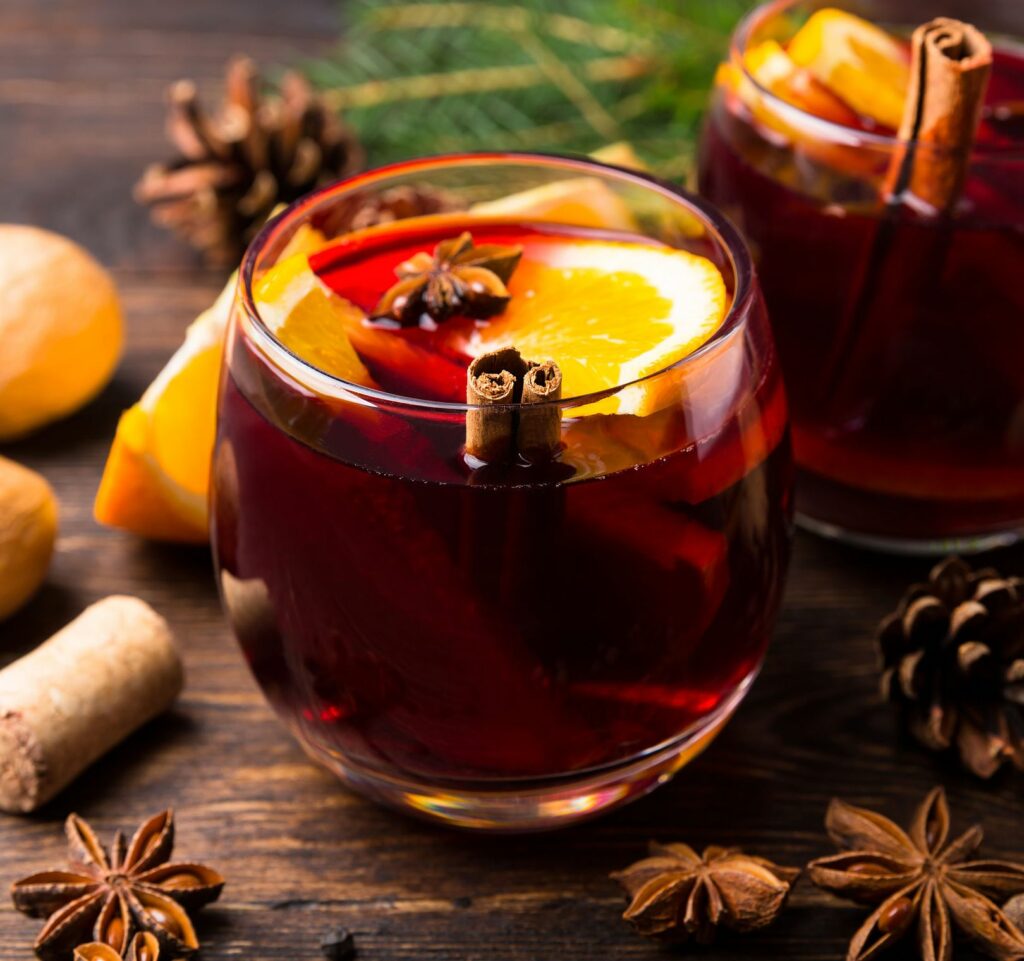
Mulled wine, also known as Christmas wine or spiced wine, is a traditional winter beverage closely associated with festive celebrations. Served warm and infused with spices such as cinnamon and cloves, often complemented by citrus or dried fruit, it is valued as much for its aroma as for its flavour. The drink has long been consumed during colder months, offering both physical warmth and a sense of seasonal comfort.
Mulled wine has developed over time, across different regions, exploring how its ingredients, preparation methods and styles. From early practices of heating and spicing wine to preserve and enhance it, to the many regional variations enjoyed today, mulled wine reflects a shared cultural response to winter, hospitality and celebration.
It is that time of the year when Christmas markets lit by fairy lights and mulled wine is much sought after. Across cultures and centuries, the idea has remained largely unchanged: wine gently heated and scented with spices to bring warmth, comfort and togetherness. From Roman traditions of spicing wine for preservation and pleasure, through medieval Europe’s winter kitchens, to today’s supermarket shelves stocked with ready-to-heat bottles, mulled wine has evolved while holding on to its emotional core, a drink rooted in ritual but adapted for modern life.
At Christmas, mulled wine is a social signal
Known as Glühwein in Germany and Austria, vin chaud in France, glögg in Scandinavia and vino caliente in Spain and Latin America, the drink anchors winter celebrations across regions. Each version reflects local tastes: almonds and raisins in Swedish glögg, a splash of rum or brandy in Central Europe, citrus and star anise in France. Christmas markets have long been its natural habitat, where steaming cauldrons draw crowds and turn cold evenings into shared experiences, reinforcing mulled wine’s role as a cultural connector.
A defined commercial category
Mulled wine has moved from being a niche Christmas-market novelty to a measurable global market. Industry estimates place the sector in the low single-digit billions of dollars, with steady growth projected through the next decade. This expansion is driven by changing consumer preferences that favour seasonal, experiential and easy-to-serve drinks, particularly during festive periods when indulgence, gifting and social gatherings peak.
The global mulled wine market is estimated at about USD 2.5 billion in 2024, with expectations to grow to roughly USD 4.1 billion by 2033 on a compound annual growth rate (CAGR) of ~6.5% through the period. This growth is driven by rising demand for seasonal beverages, premium and festive drink formats, ready-to-serve products, and expanding consumption beyond traditional European markets.
Europe dominates this category, accounting for over half of global mulled wine sales, supported by longstanding cultural traditions, Christmas markets and strong hospitality sectors in Germany, the UK, France and the Nordic countries. North America and Asia–Pacific are emerging markets, with increasing interest in mulled wine as a lifestyle and seasonal drink, particularly in urban and premium segments.
Wine Exporting Countries
France is currently the world’s largest wine exporter by value, exporting around US $12.9 billion worth of wine in 2023, followed by Spain and Chile. Italy and Spain also rank among the top global wine exporters, with Italy often leading in volume terms and both contributing significant shares of global wine exports. These countries act as major sources of base wines that can be used for mulled wine production or supplied into international markets where mulled wine is bottled, flavoured and sold. Their export strength underpins the supply chain that supports seasonal beverage markets worldwide.
Three key trends fuelling the market’s growth
The first is experiential consumption: consumers increasingly seek moments rather than just products, and a cup of mulled wine, whether at a market, pop-up bar or festive event, delivers warmth, nostalgia and visual appeal. The second is convenience. Pre-spiced, ready-to-heat mulled wines have made it easy for households, offices and restaurants to recreate the Christmas-market experience without recipes, equipment or time. The third is geographic spread. While traditionally dominant in colder European countries, mulled wine is finding audiences in warmer markets, where it is embraced as a seasonal novelty tied to global Christmas culture rather than climate alone.
Retailers and supermarkets mainstreaming mulled wine
Across the UK and Europe, major chains release mulled wine lines as early as October, positioning them as both festive staples and giftable products. Private-label mulled wines now sit alongside premium and flavoured variants, often selling out well before Christmas. This retail presence has turned mulled wine into a predictable seasonal SKU, complete with merchandising strategies, price tiers and limited-edition releases designed to drive repeat purchases.
In Scandinavia, brands such as Sweden’s Blossa have built strong identities around glögg, combining tradition with innovation through annual flavour releases that become collectible items. In southern Europe, large producers like Spain’s Felix Solis manufacture mulled wine and other aromatised wine products at scale, supplying export markets and private labels. These producers demonstrate the category’s flexibility, accommodating both heritage-driven branding and high-volume commercial production.
The coexistence of craft and commodity
Small wineries and artisanal producers still prepare mulled wine in limited batches, often using local wine and bespoke spice blends for Christmas markets and regional festivals. At the same time, multinational bottlers work with bulk wine and standardised flavour profiles to meet supermarket demand. While purists sometimes criticise the industrialisation of a traditional drink, broader accessibility has expanded the consumer base and reinforced mulled wine’s place in modern Christmas culture.
Product innovation, the next phase of growth
Producers are responding to changing drinking habits with low-alcohol and non-alcoholic mulled wines, organic variants and premium expressions aimed at gifting and hospitality. Limited-edition seasonal blends, alternative base wines and refined spice profiles are helping the category move beyond its entry-level image and appeal to more discerning drinkers without losing its festive familiarity.
In countries such as Australia and parts of Asia, mulled wine has become an imported Christmas ritual, embraced for its symbolic connection to European winter festivities. Local adaptations, incorporating regional spices, fruits or spirits, hint at future diversification, suggesting that mulled wine may continue to evolve as a globally interpreted seasonal drink.
At the intersection of tradition, emotion and commerce
It remains a sensory anchor of Christmas, warming, aromatic and communal, while also functioning as a serious seasonal business with growing retail and export potential. Whether served from a market stall, poured from a supermarket bottle or reinvented in a modern bar, mulled wine has secured its place as both a cherished holiday ritual and a recognised segment of the global wine market.